L’analyse textuelle
Introduction aux mégadonnées en sciences sociales
Université de Montréal
Retour sur le Quiz1
- Utiliser GitHub pour sauvegarder vos fichiers
- Comment retourner sur GitHub pour voir l’ancienne version de votre TP1
- Faire table() avant et après
- Éviter de mettre les citations en texte
- Ne laissez pas de code inutile
Utiliser les citations en markdown
La mauvaise façon ❌
Selon Wickham (2014) (Wickham, 2014), les tidy data ont trois propriétés.
Les deux options ✅
Selon Wickham (2014), les tidy data ont trois propriétés:
Les tidy data ont trois propriétés (Wickham, 2014).
Ne pas laisser de code inutile
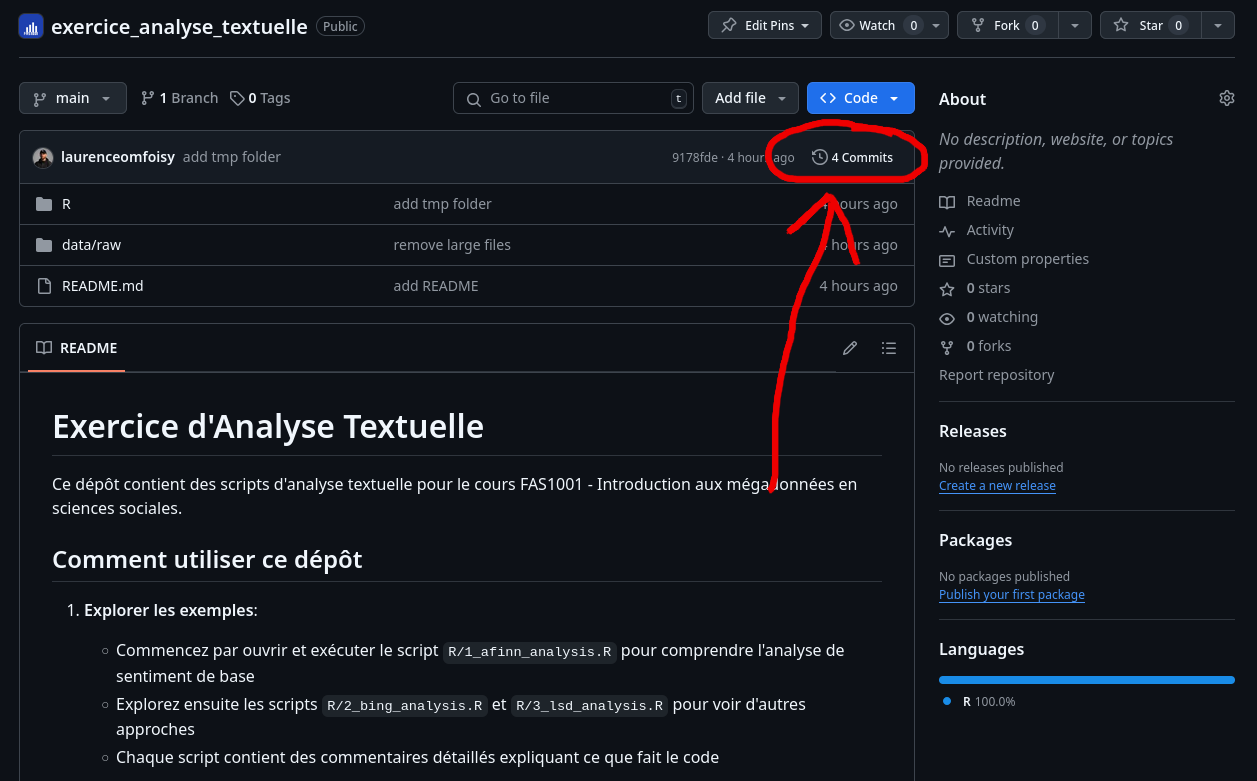
Utiliser l’historique GitHub pour voir les changements
TP2 - Travail de mi-session
- À remettre le 11 mars 2025 avant minuit
- 20% de la note finale
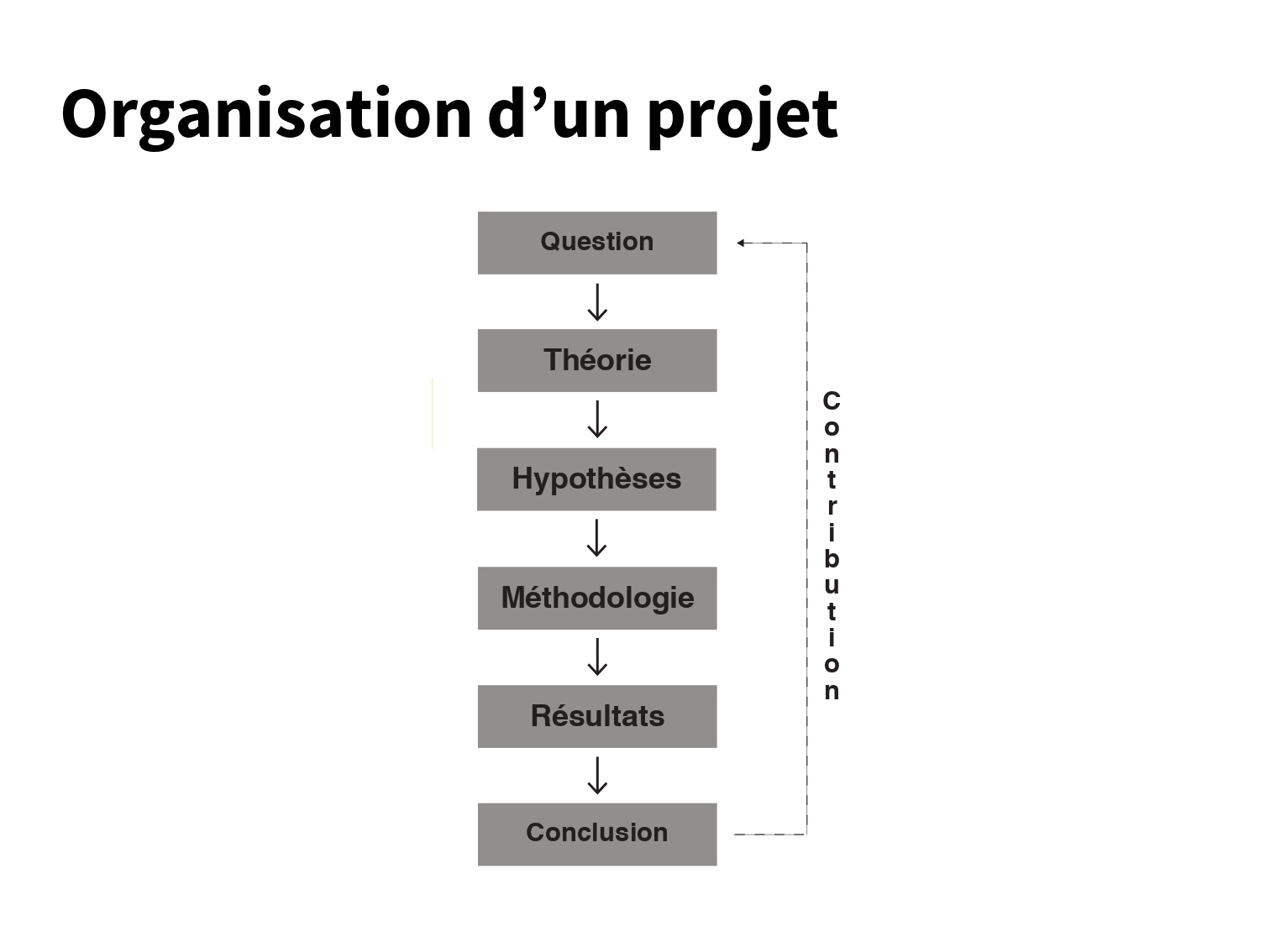
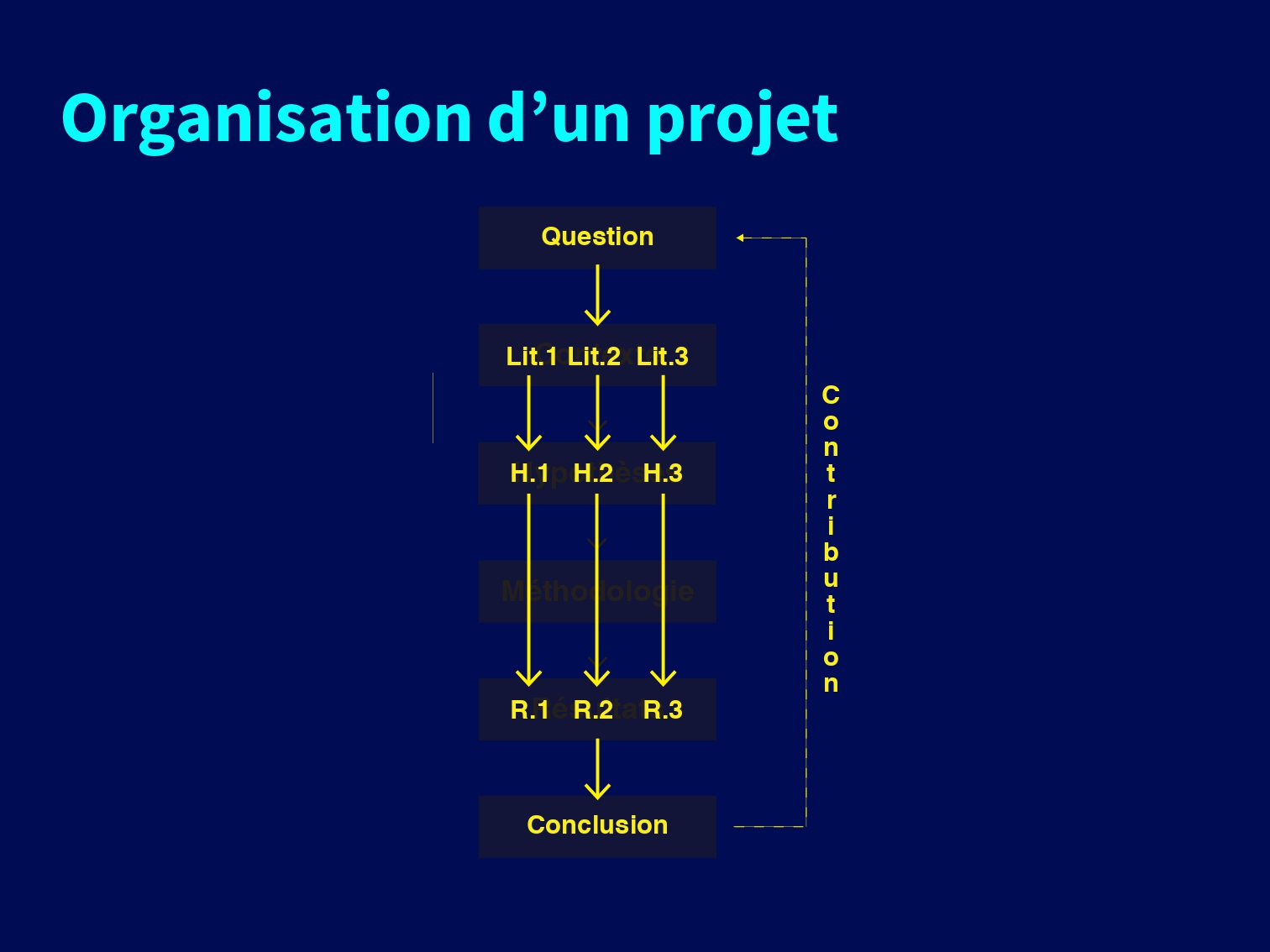
Gabarit suggéré
- Introduction
- Question de recherche
- Revue de littérature
- Hypothèses dérivées de la littérature
- Données et méthodologies
- Résultats
- Discussion
- Conclusion
Introduction à l’analyse textuelle
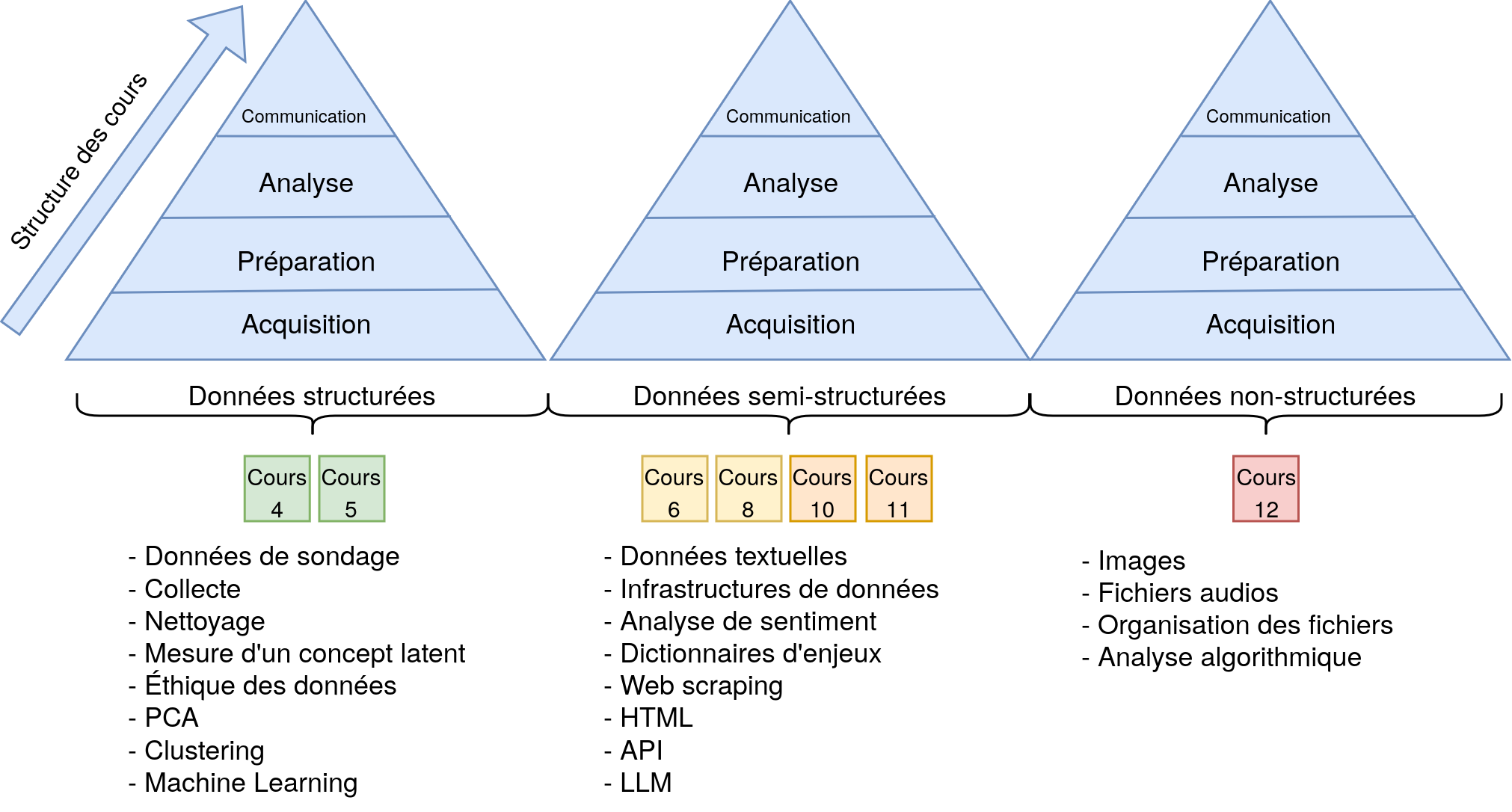
Structure du cours
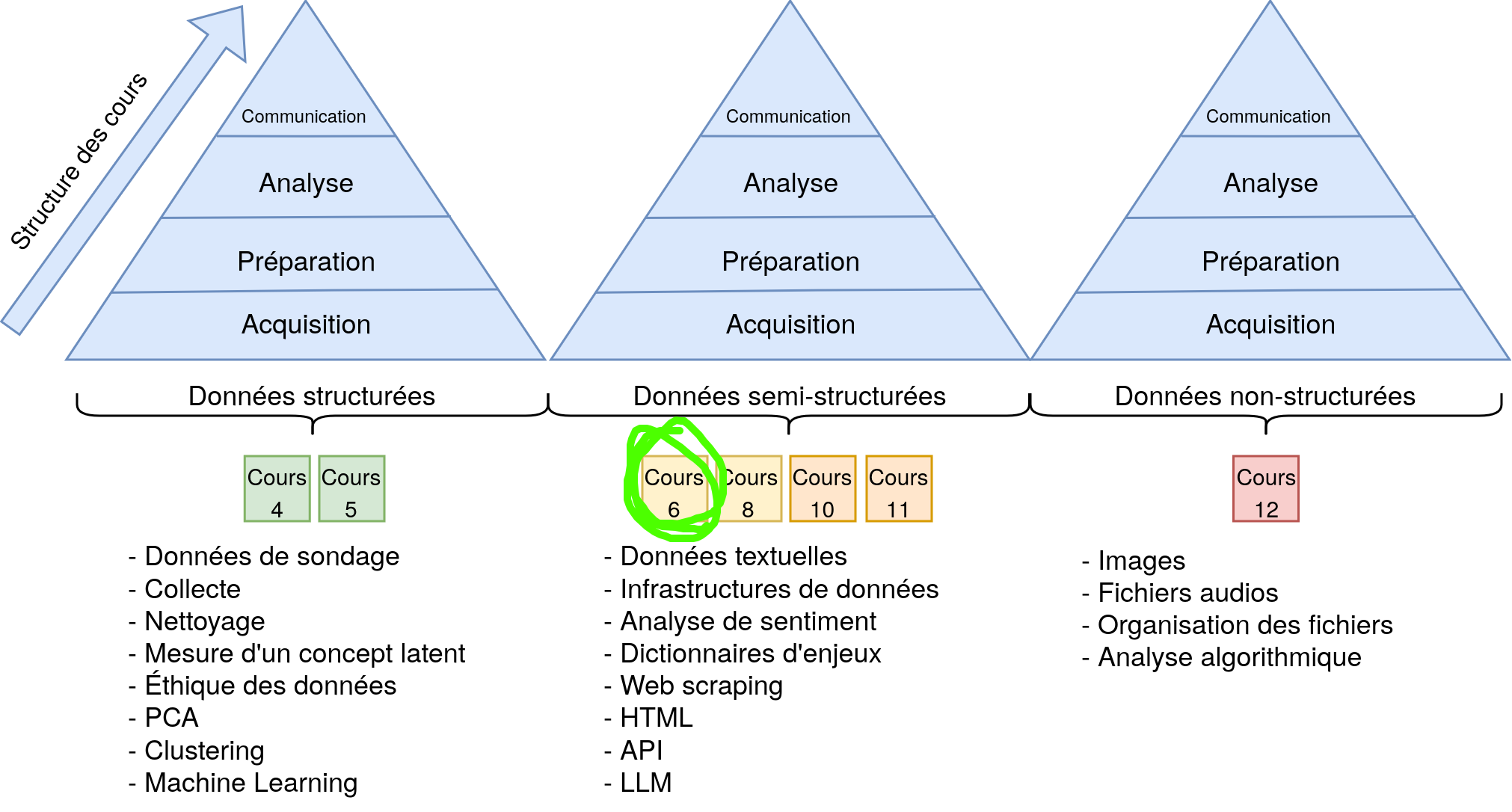
Pourquoi analyser du texte?
Les données sont partout 🌎 🌍 🌏
- Données textuelles disponibles en grande quantité
- Méthodes de recherche de plus en plus accessibles
- Idée(s) sur différentes sources de données textuelles?
L’explosion des données textuelles
- Médias sociaux
- Articles de presse
- Documents légaux
- Sondages (questions ouvertes)
- Courriels
- Messages instantanés
- Beaucoup plus
Que peut-on faire avec le texte?
- Analyse de sentiment
- Classification de documents
- Extraction de thèmes
- Résumé automatique
- Analyse de discours
Différentes méthodes d’analyse textuelle
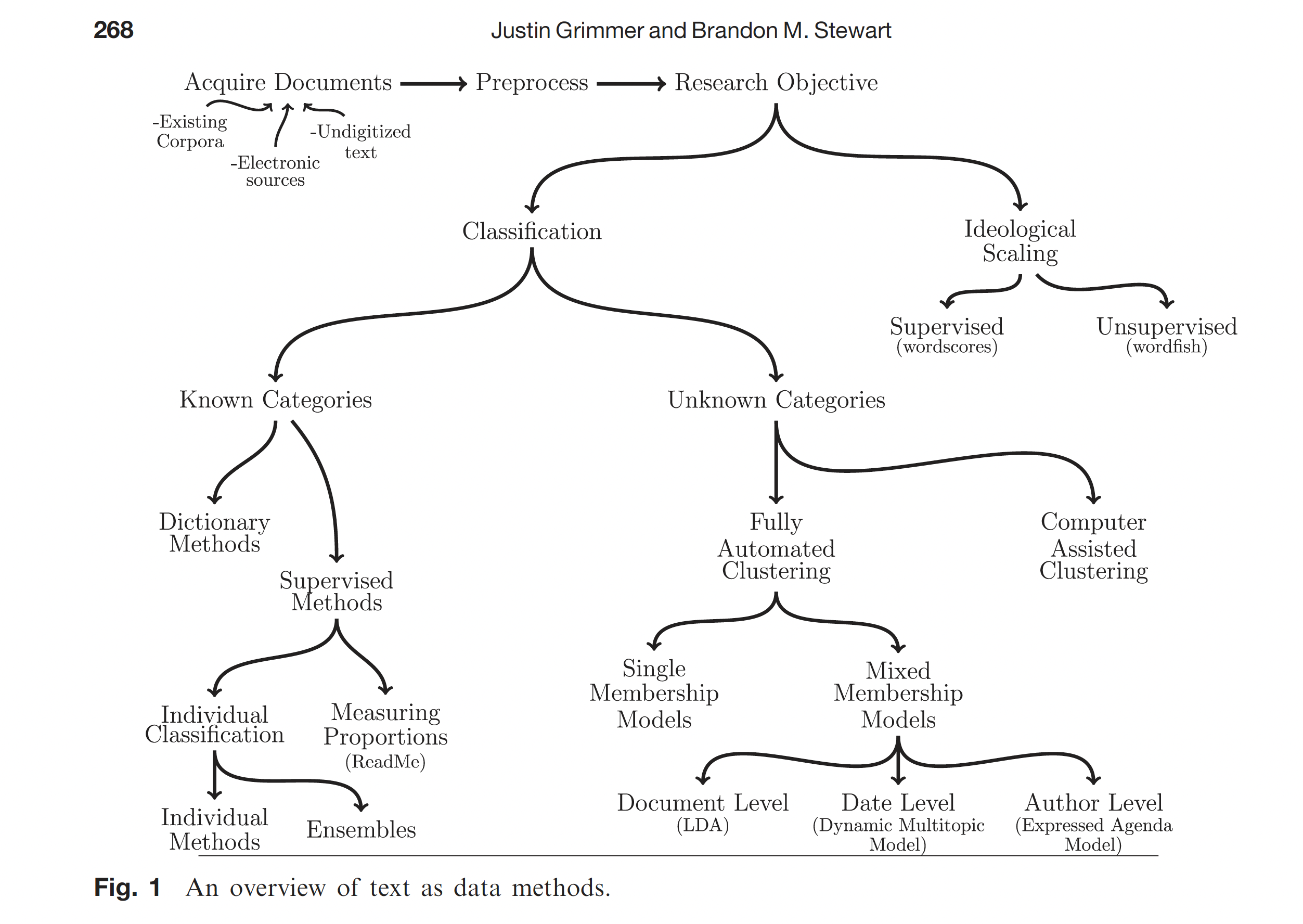
Le pipeline de traitement textuel
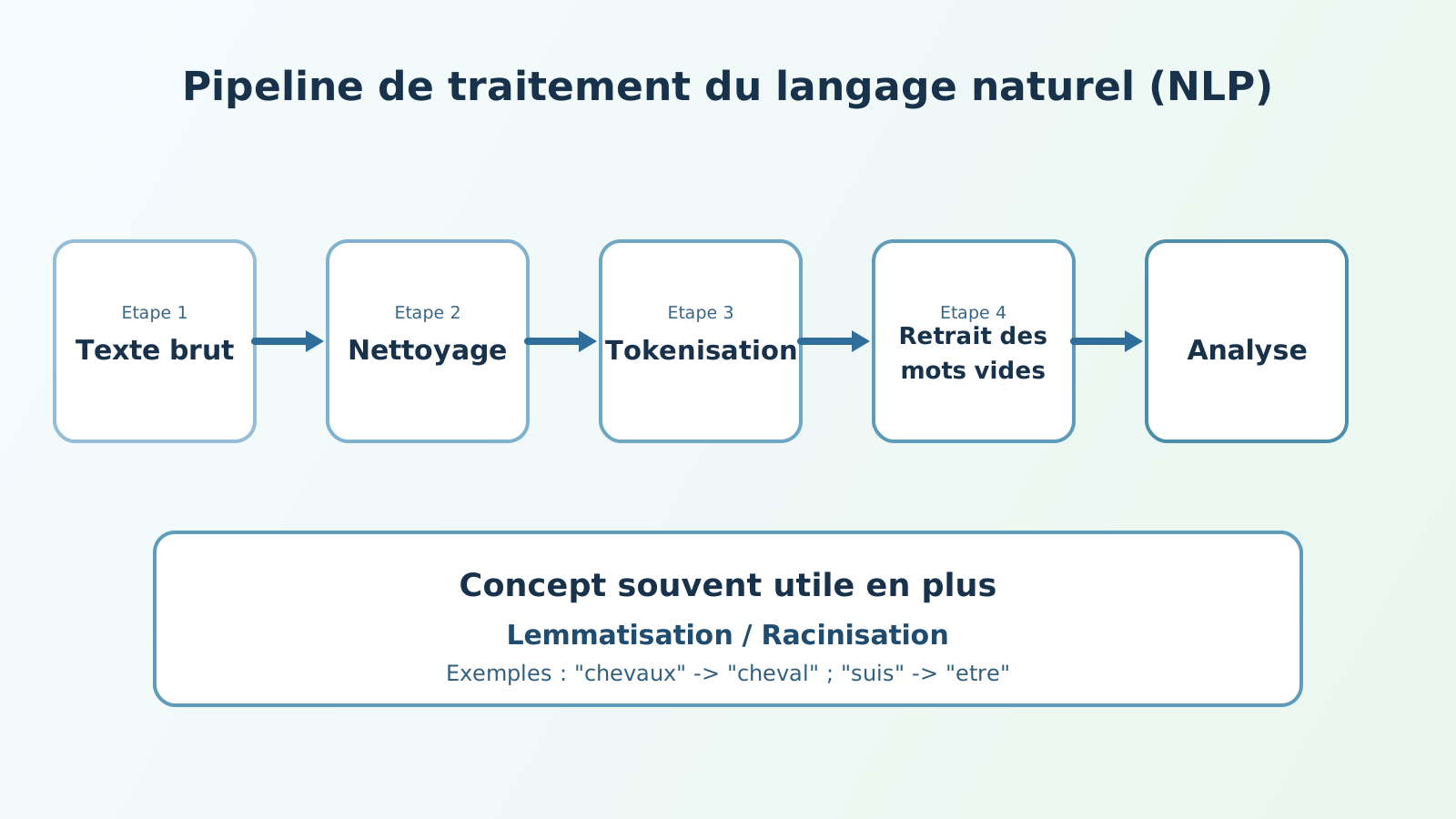
Tokenisation
Découper le texte en mots
"J'aime analyser du texte"
      ↓
["J'", "aime", "analyser", "du", "texte"]
Stopwords (mots vides)
Quoi retirer?
Français : le, la, de, et, un, dans, est…
Anglais : the, a, an, in, on, at, is…
Avant et après
Avant
le chat est sur le tapis6 mots
Après
chat tapis2 mots significatifs
Introduction aux expressions régulières
Qu’est-ce qu’on essaie de faire?
- Trouver des patterns dans du texte
- Exemple : Trouver tous les numéros de téléphone dans un document
- Exemple : Extraire tous les courriels d’un texte
Un exemple concret
Imaginons que vous ayez ce texte:
Comment trouver automatiquement tous les numéros de téléphone?
La solution “manuelle”
- Chercher des chiffres
- Regroupés par 3 ou 4
- Séparés par des tirets
- Commençant par 514 ou 438
La solution avec regex
Décomposons le pattern
\d: un chiffre (0-9){3}: exactement 3 fois-: un tiret- Donc
\d{3}-\d{3}-\d{4}trouve: “514-555-1234”
Un deuxième exemple : Les courriels
Reprenons le même texte:
Comment trouver automatiquement toutes les adresses courriel?
La solution “manuelle”
- Chercher des lettres
- Suivies d’un symbole @
- Suivies du nom de domaine
- Terminant par .ca, .com, etc.
La solution avec regex
Décomposons le pattern
[a-zA-Z0-9._%+-]+: lettres, chiffres et caractères spéciaux (avant @)@: le symbole @[a-zA-Z0-9.-]+: lettres, chiffres, points et tirets (nom de domaine)\\.: un point (échappé avec \)[a-zA-Z]{2,}: au moins 2 lettres (.ca, .com, .info, etc.)- Donc ce pattern trouve: “marie@udem.ca” et “jean.dupont@umontreal.ca”
Pourquoi c’est utile?
- Automatise la recherche de patterns
- Fonctionne sur n’importe quelle quantité de texte
- Plus rapide et fiable que la recherche manuelle
- Essentiel pour le nettoyage de données textuelles
Utilisation dans R
Le package stringr
- Fait partie du tidyverse
- Fonctions simples et cohérentes
- Documentation claire avec de nombreux exemples
Fonctions principales de stringr
Exemple pratique
Les briques de base des regex
\d : Chiffres
[A-Z] : Lettres majuscules
\s : Espaces
Caractères spéciaux
\w : Mot (lettres + chiffres + _)
. : N’importe quel caractère
Cas d’usage pour l’analyse textuelle
Retirer les URLs d’un texte
Extraire les hashtags
Normaliser les dates
Les quantificateurs : Combien de fois?
Le + : “un ou plusieurs”
Le * : “zéro ou plusieurs”
Le ? : “optionnel (zéro ou un)”
Exemples pratiques pour les sciences sociales
Extraire des codes postaux canadiens
Extraire des identifiants Twitter
Extraire des pourcentages
Analyse de sentiment
Analyse par dictionnaire
Le principe
Attribuer un score à chaque mot selon sa connotation émotionnelle
| Mot | Score |
|---|---|
| excellent | +3 |
| bon | +1 |
| mauvais | -1 |
| horrible | -3 |
Le score du texte = somme ou moyenne des scores
Qu’est-ce qu’un dictionnaire de sentiment?
Une liste de mots avec des scores prédéfinis
- Créé manuellement par des experts
- Chaque mot associé à un score (positif/négatif)
Avantages
- Rapide et reproductible
- Pas besoin d’entraînement
Dictionnaires populaires
| Dictionnaire | Langue | Type de score | Utilisation |
|---|---|---|---|
| AFINN | EN | -5 à +5 | Médias sociaux, avis |
| Bing | EN | Pos/Neg | Analyses générales |
| NRC | EN/FR | 8 émotions | Analyse émotionnelle |
| Lexicoder | EN/FR | Binaire | Textes politiques |
| VADER | EN | -1 à +1 | Twitter, slang |
Le dictionnaire AFINN
Créé par Finn Årup Nielsen (2011)
- 2,477 mots en anglais
- Scores de -5 (très négatif) à +5 (très positif)
- Optimisé pour les textes courts (Twitter, avis)
- Inclut du vocabulaire informel
Exemples
| Mot | Score | Mot | Score |
|---|---|---|---|
| love | +3 | hate | -3 |
| excellent | +3 | terrible | -3 |
| good | +3 | bad | -3 |
| disappointed | -2 | recommend | +2 |
Analyse avec AFINN : La ligne rouge
Super good kebab! The portions are generous, the prices are really reasonable, and the quality is there. Tasty meat, fresh bread, and everything is well seasoned. An excellent address for a meal that is good without breaking the bank. I recommend!
- Sentiment: Positif
- Thèmes: Nourriture, Prix
- Note: 5/5
Étape 1: Texte brut
# Créer un data.frame avec notre review
review <- data.frame(
  restaurant = "La ligne rouge",
  text = "Super good kebab! The portions are generous, the prices are really reasonable, and the quality is there. Tasty meat, fresh bread, and everything is well seasoned. An excellent address for a meal that is good without breaking the bank. I recommend!",
  stringsAsFactors = FALSE
)
Donne un dataframe comme ceci
| restaurant | text |
|---|---|
| La ligne rouge | Super good kebab! […] |
Étape 2: Nettoyage
# Nettoyage avec stringr
review_clean <- review
review_clean$text <- stringr::str_to_lower(review_clean$text)                 # Minuscules
review_clean$text <- stringr::str_remove_all(review_clean$text, "!")          # Exclamations
review_clean$text <- stringr::str_remove_all(review_clean$text, "\\.")        # Points
review_clean$text <- stringr::str_remove_all(review_clean$text, ",") # VirgulesSuper good kebab! The portions are generous, the prices are really reasonable, and the quality is there. Tasty meat, fresh bread, and everything is well seasoned. An excellent address for a meal that is good without breaking the bank. I recommend!
Étape 2: Nettoyage
# Nettoyage avec stringr
review_clean <- review
review_clean$text <- stringr::str_to_lower(review_clean$text)                 # Minuscules
review_clean$text <- stringr::str_remove_all(review_clean$text, "!")          # Exclamations
review_clean$text <- stringr::str_remove_all(review_clean$text, "\\.")        # Points
review_clean$text <- stringr::str_remove_all(review_clean$text, ",")          # Virgules
super good kebab the portions are generous the prices are really reasonable and the quality is there tasty meat fresh bread and everything is well seasoned an excellent address for a meal that is good without breaking the bank i recommend
Étape 3: Tokenisation
r$> head(tokens, 10)
       restaurant     word
1  La ligne rouge    super
2  La ligne rouge     good
3  La ligne rouge    kebab
4  La ligne rouge      the
5  La ligne rouge portions
6  La ligne rouge      are
7  La ligne rouge generous
8  La ligne rouge      the
9  La ligne rouge   prices
10 La ligne rouge      are
Étape 4: Retrait des mots vides
r$> head(tokens_clean, 10)
       restaurant       word
1  La ligne rouge      super
2  La ligne rouge       good
3  La ligne rouge      kebab
4  La ligne rouge   portions
5  La ligne rouge   generous
6  La ligne rouge     prices
7  La ligne rouge     really
8  La ligne rouge reasonable
9  La ligne rouge    quality
10 La ligne rouge      tasty
Étape 5: Analyse (AFINN)
r$> head(arranged_scores, 10)
       word value
1     super     3
2      good     3
3 excellent     3
4      good     3
5  generous     2
6 recommend     2
7     fresh     1
Étape 5: Analyse (AFINN)
r$> total_sentiment
  n_words total_score avg_score
1       7          17  2.428571
Avec plusieurs textes
Nothing exceptional, just edible. I had good feedback about the food and I was very, very disappointed. Not to mention cash only which for me is unacceptable. Too many good restaurants in the neighborhood, I won’t go back there
Food is good and price is ok. The only issu is the attitude of the staff. The lady at he cash register and the guy that takes the orders seriously lack client service skills. Both are very rude. Hygiene is another issue, there are flies all over the place. In addition to all this, they only take cash.
# Créer un data.frame avec plusieurs reviews
reviews <- data.frame(
  restaurant = "La ligne rouge",
  text = c(
    "Super good kebab! The portions are generous, the prices are really reasonable, and the quality is there. Tasty meat, fresh bread, and everything is well seasoned. An excellent address for a meal that is good without breaking the bank. I recommend!",
    "Nothing exceptional, just edible. I had good feedback about the food and I was very, very disappointed. Not to mention cash only which for me is unacceptable. Too many good restaurants in the neighborhood, I won't go back there",
    "Food is good and price is ok. The only issu is the attitude of the staff. The lady at he cash register and the guy that takes the orders seriously lack client service skills. Both are very rude. Hygiene is another issue, there are flies all over the place. In addition to all this, they only take cash."
  ),
  stringsAsFactors = FALSE
) %>%
  dplyr::mutate(id = 1:nrow(.))
Nettoyage des multiples textes
reviews_clean <- reviews
reviews_clean$text <- stringr::str_to_lower(reviews_clean$text)                 # Minuscules
reviews_clean$text <- stringr::str_remove_all(reviews_clean$text, "!")          # Exclamations
reviews_clean$text <- stringr::str_remove_all(reviews_clean$text, "\\.")        # Points
reviews_clean$text <- stringr::str_remove_all(reviews_clean$text, ",")          # Virgules
Étape 3: Tokenisation
r$> head(tokens, 10)
       restaurant id     word
1  La ligne rouge  1    super
2  La ligne rouge  1     good
3  La ligne rouge  1    kebab
4  La ligne rouge  1      the
5  La ligne rouge  1 portions
6  La ligne rouge  1      are
7  La ligne rouge  1 generous
8  La ligne rouge  1      the
9  La ligne rouge  1   prices
10 La ligne rouge  1      are
Étape 4: Retrait des mots vides
r$> head(tokens_clean, 10)
       restaurant id       word
1  La ligne rouge  1      super
2  La ligne rouge  1       good
3  La ligne rouge  1      kebab
4  La ligne rouge  1   portions
5  La ligne rouge  1   generous
6  La ligne rouge  1     prices
7  La ligne rouge  1     really
8  La ligne rouge  1 reasonable
9  La ligne rouge  1    quality
10 La ligne rouge  1      tasty
Étape 5: Analyse de sentiment (AFINN)
r$> head(sentiment_scores, 10)
       restaurant id         word value
1  La ligne rouge  1        super     3
2  La ligne rouge  1         good     3
3  La ligne rouge  1     generous     2
4  La ligne rouge  1        fresh     1
5  La ligne rouge  1    excellent     3
6  La ligne rouge  1         good     3
7  La ligne rouge  1    recommend     2
8  La ligne rouge  2         good     3
9  La ligne rouge  2 disappointed    -2
10 La ligne rouge  2 unacceptable    -2
Étape 5: Analyse de sentiment (AFINN)
# Calculate summary statistics per review
sentiment_summary <- sentiment_scores %>%
  group_by(id, restaurant) %>%
  summarise(
    total_sentiment = sum(value),            # Sum of all sentiment scores
    mean_sentiment = mean(value),            # Average sentiment
    word_count = n(),                        # Number of sentiment words
    min_sentiment = min(value),              # Most negative word
    max_sentiment = max(value)               # Most positive word
  ) %>%
  ungroup()
Voici les résultats
r$> print(sentiment_summary)
# A tibble: 3 × 7
     id restaurant     total_sentiment mean_sentiment word_count min_sentiment max_sentiment
  <int> <chr>                    <dbl>          <dbl>      <int>         <dbl>         <dbl>
1     1 La ligne rouge              17           2.43          7             1             3
2     2 La ligne rouge               2           0.5           4            -2             3
3     3 La ligne rouge               1           0.5           2            -2             3
Réassembler les données
En réunissant le text original avec les analyses:
r$> sentiment_summary_with_text
# A tibble: 3 × 8
     id restaurant     total_sentiment mean_sentiment word_count [..] text
  <int> <chr>                    <dbl>          <dbl>      <int> [..] <chr>
1     1 La ligne rouge              17           2.43          7 [..] Super good kebab! [...]
2     2 La ligne rouge               2           0.5           4 [..] Nothing exceptional [...]
3     3 La ligne rouge               1           0.5           2 [..] Food is good and price is ok. [...]
Conseils pratiques
- Validation
- Vérifier manuellement les résultats
- Comparer les dictionnaires
- Documenter les choix méthodologiques
- Limites
- Aucun dictionnaire n’est parfait
- Contexte est toujours important
- Valider avec analyses qualitatives
Quel lexique choisir?
| Lexique | Type de score | Forces | Utilisation idéale | Discipline |
|---|---|---|---|---|
| AFINN | -5 à +5 | Nuancé, simple | Médias sociaux, avis | Marketing |
| BING | Pos/Neg | Simple, précis | Analyses générales | Sciences sociales |
| NRC | 8 émotions | Riche en contexte | Analyse émotionnelle | Psychologie |
| Lexicoder | Binaire + thèmes | Validé académiquement | Discours politiques | Science politique |
| VADER | -1 à +1 | Gère emojis/web | Médias sociaux | Communications |
Limites de l’analyse de sentiment
Problèmes linguistiques
- Ironie : “Super, encore un retard…”
- Expressions idiomatiques : “J’ai mon voyage”
- Contexte culturel : “Sick” = malade ou cool?
- Négations complexes : “Not bad at all, pas pire pantoute”
Limites techniques
- Dépendance au dictionnaire
- Mots ambigus
- Agrégation qui cache les nuances
- Évolution du langage
Quand ne PAS utiliser
- Textes très courts (< 5 mots)
- Vocabulaire très spécialisé
- Forte présence d’ironie/sarcasme
Bonnes pratiques
- Valider manuellement un échantillon
- Utiliser plusieurs dictionnaires
- Analyser par segments
- Documenter vos choix
- Reconnaître les limites
LDA : Allocation de Dirichlet Latente
Qu’est-ce que c’est?
- Une méthode pour découvrir automatiquement des thèmes dans une collection de textes
- Développée en 2003 (Blei, Ng, Jordan)
- Apprentissage non supervisé : l’algorithme découvre seul les structures

L’intuition derrière LDA
L’idée centrale
- Chaque document contient plusieurs sujets
- Chaque sujet est une collection de mots liés
- Les mots apparaissent avec différentes probabilités dans chaque sujet
Comment fonctionne LDA?
Approche non supervisée
- Aucune connaissance préalable
- Pas de liste de mots prédéfinie
- Pas d’étiquettes nécessaires
- Découverte automatique
- Les relations entre mots émergent des données
- Les thèmes se forment naturellement
Le processus en pratique
Étapes simplifiées
- Transformer les textes en chiffres
- Commencer par des assignations aléatoires
- Répéter des milliers de fois:
- Pour chaque mot: quel sujet est le plus probable?
- Mettre à jour les distributions
- Aboutir à des groupes cohérents
Avantages pour les sciences sociales
Pourquoi utiliser LDA en sciences sociales?
- Analyse de grandes quantités de texte (discours politiques, médias sociaux)
- Découverte objective de thèmes sans biais d’interprétation préalable
- Suivi de l’évolution des discours dans le temps
- Combinaison possible avec l’analyse de sentiment
Limites à connaître
- Nombre de sujets (k) à définir à l’avance
- Les sujets nécessitent une interprétation humaine
- Besoin d’un volume suffisant de données
Le processus LDA en 4 étapes

Modélisation de sujets (Topic Modeling)
# Chargement des bibliothèques
library(tidytext)
library(tidyr)
library(dplyr)
library(ggplot2)
library(topicmodels)

# Charger les exemples de reviews de restaurants
reviews <- data.frame(
  restaurant = "La ligne rouge",
  text = c(
    "Super good kebab! The portions are generous, the prices are really reasonable, and the quality is there. Tasty meat, fresh bread, and everything is well seasoned. An excellent address for a meal that is good without breaking the bank. I recommend!",
    "Nothing exceptional, just edible. I had good feedback about the food and I was very, very disappointed. Not to mention cash only which for me is unacceptable. Too many good restaurants in the neighborhood, I won't go back there",
    "Food is good and price is ok. The only issu is the attitude of the staff. The lady at he cash register and the guy that takes the orders seriously lack client service skills. Both are very rude. Hygiene is another issue, there are flies all over the place. In addition to all this, they only take cash."
  ),
  stringsAsFactors = FALSE
) %>%
  dplyr::mutate(id = 1:nrow(.))
Création de la matrice document-terme
<<DocumentTermMatrix (documents: 3, terms: 71)>>
Non-/sparse entries: 77/136
Sparsity           : 64%
Maximal term length: 11
Weighting          : term frequency (tf)
Sample             :
      Terms
Docs   food good price quality
  doc_1    0    2     0       1
  doc_2    1    1     0       0
  doc_3    1    1     1       0
Application du modèle LDA
# Exécuter le modèle LDA
set.seed(123) # Pour la reproductibilité
lda_model <- LDA(reviews_dtm, k = 2, control = list(seed = 123, verbose = TRUE))

# Examiner la distribution des sujets pour chaque document
topics <- tidy(lda_model, matrix = "gamma")
topics_wide <- topics %>%
  pivot_wider(names_from = topic, values_from = gamma)

print(topics_wide)
# A tibble: 3 × 3
document `1` `2`
<chr> <dbl> <dbl>
1 doc_1 0.692 0.308
2 doc_2 0.333 0.667
3 doc_3 0.391 0.609Extraction des termes principaux pour chaque sujet
r$> print(top_terms)
# A tibble: 20 × 3
# Groups:   topic [2]
   topic term           beta
   <int> <chr>         <dbl>
 1     1 portions     0.0384
 2     1 hygiene      0.0381
 3     1 takes        0.0374
 4     1 seasoned     0.0366
 5     1 recommend    0.0364
 6     1 lady         0.0352
 7     1 disappointed 0.0334
 8     1 client       0.0333
 9     1 super        0.0328
10     1 address      0.0321
11     2 cash         0.113
12     2 food         0.0600
13     2 bank         0.0390
14     2 meal         0.0389
15     2 feedback     0.0377
16     2 bread        0.0374
17     2 meat         0.0371
18     2 kebab        0.0350
19     2 prices       0.0317
20     2 generous     0.0305
Interprétation des résultats
Sujet : Services et expérience
- portions (0.0384)
- hygiene (0.0381)
- takes (0.0374)
- seasoned (0.0366)
- recommend (0.0364)
- lady (0.0352)
- disappointed (0.0334)
- client (0.0333)
- super (0.0328)
- address (0.0321)
Sujet : Nourriture et prix
- cash (0.1130)
- food (0.0600)
- bank (0.0390)
- meal (0.0389)
- feedback (0.0377)
- bread (0.0374)
- meat (0.0371)
- kebab (0.0350)
- prices (0.0317)
- generous (0.0305)
Résultats avec k=3 topics
Topic 1: Qualité de la nourriture
good, kebab, meat, bread, quality, tasty, fresh, seasoned
Topic 2: Service et expérience
staff, attitude, rude, disappointed, exceptional, lady, client
Topic 3: Prix et paiement
prices, reasonable, cash, bank, meal, generous, portions
Résultats avec k=5 topics
Topics découverts
- Qualité culinaire: kebab, meat, bread, fresh, tasty
- Portions et générosité: portions, generous, quality
- Prix: prices, reasonable, bank, meal
- Service client: staff, attitude, lady, client
- Problèmes: disappointed, rude, cash, hygiene, flies
Comment choisir k?
Approches courantes
- Intuition du domaine: Combien de thèmes attendez-vous?
- Essais multiples: Tester k=2, 3, 5, 10 et comparer
- Métriques statistiques: Perplexité, cohérence
- Interprétabilité: Les topics sont-ils cohérents?
Règle pratique
Commencer petit (k=2-5) et augmenter progressivement
Cas d’usage en sciences sociales
- Analyser des milliers de discours parlementaires
- Identifier les thèmes dans des campagnes électorales
- Suivre l’évolution de débats publics dans le temps
- Découvrir des patterns dans des questions ouvertes de sondages
Classification des reviews par sujet
# Afficher la distribution des sujets pour chaque review
document_topics <- augment(lda_model, data = reviews_dtm)

# Mettre en forme pour faciliter la lecture
review_classifications <- document_topics %>%
  select(document, .topic) %>%
  distinct() %>%
  mutate(
    review_id = as.integer(gsub("doc_", "", document)),
    review_text = reviews$text[review_id],
    primary_topic = ifelse(.topic == 1, "Nourriture", "Service/Expérience")
  ) %>%
  select(document, review_text, primary_topic) %>%
  arrange(document)

# Afficher la classification des reviews
head(review_classifications, 3)
Classification des reviews par sujet
Sujet : Nourriture
Review 1
“Super good kebab! The portions are generous, the prices are really reasonable…”
Mots-clés: kebab, meat, bread, portions
Sujet : Service/Expérience
Review 2
“Nothing exceptional, just edible. I had good feedback about the food and I was very, very disappointed…”
Mots-clés: disappointed, cash only, exceptional
Review 3
“Food is good and price is ok. The only issu is the attitude of the staff…”
Mots-clés: staff, attitude, hygiene

Comment utiliser les regex en R?
L’intelligence artificielle 😉